
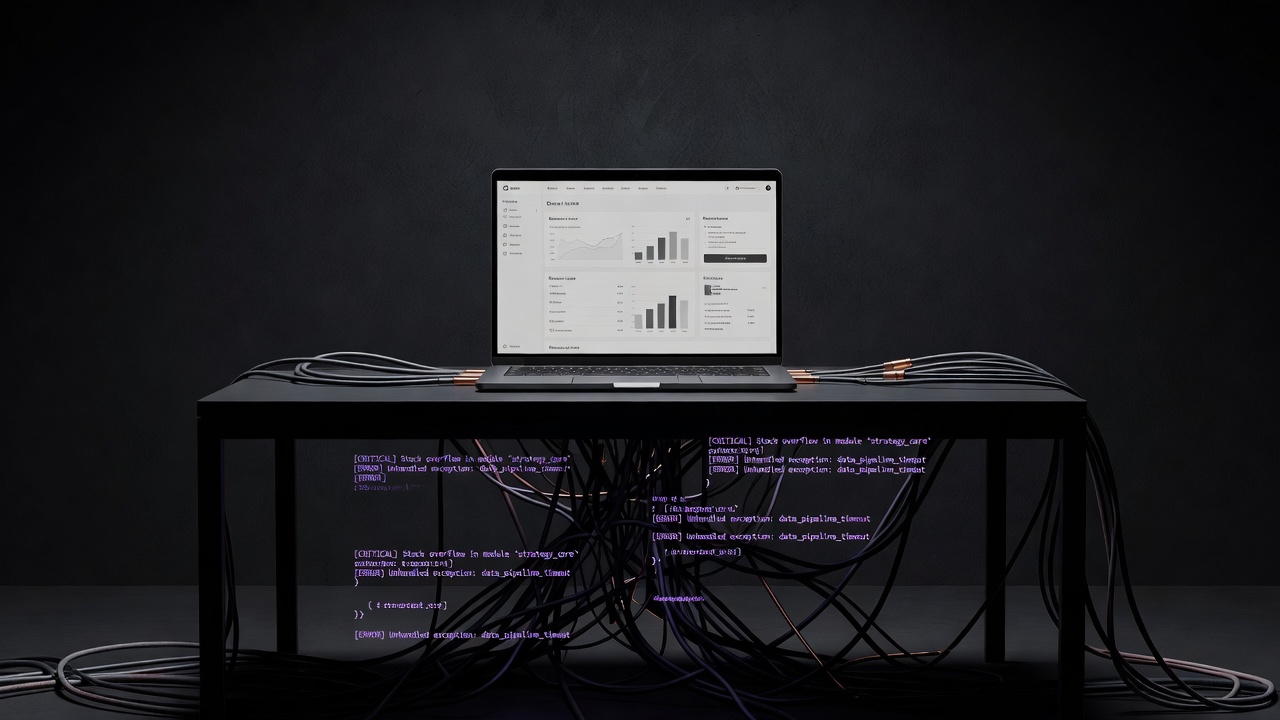
Your engineering manager at a 140-person Melbourne payments startup runs the weekly sprint review on a curated dataset that skips every reconciliation failure and timeout scenario the finance team flagged last quarter.
The demo shows clean payment flows and instant dashboard updates. No one runs the 4 a.m. batch that processes 18 months of disputed charges across three legacy ledgers with mismatched time zones.
Build decisions get locked in because the prototype passed the internal audience. Real shipping stalls when the first production incident reveals that the event sourcing layer was never stress-tested against duplicate idempotency keys.
The team spent three sprints polishing the UI layer for the review while the observability hooks that would surface partial failures remained as TODO comments in the commit history.
Vendors get invited to the same sessions and mirror the pattern: their scripted paths work, yet any deviation that hits Australian reporting rules or multi-currency rounding triggers manual overrides no one priced into the original scope.
The difference shows up in release notes. One company ships three minor patches a month and still loses customer trust; the other ships quarterly but with traceable failure modes that the support team can actually diagnose.
Stop measuring craft by what appears on the demo screen. Measure it by how quickly a new engineer can reproduce a reported edge case in an isolated environment without phoning the original author.