
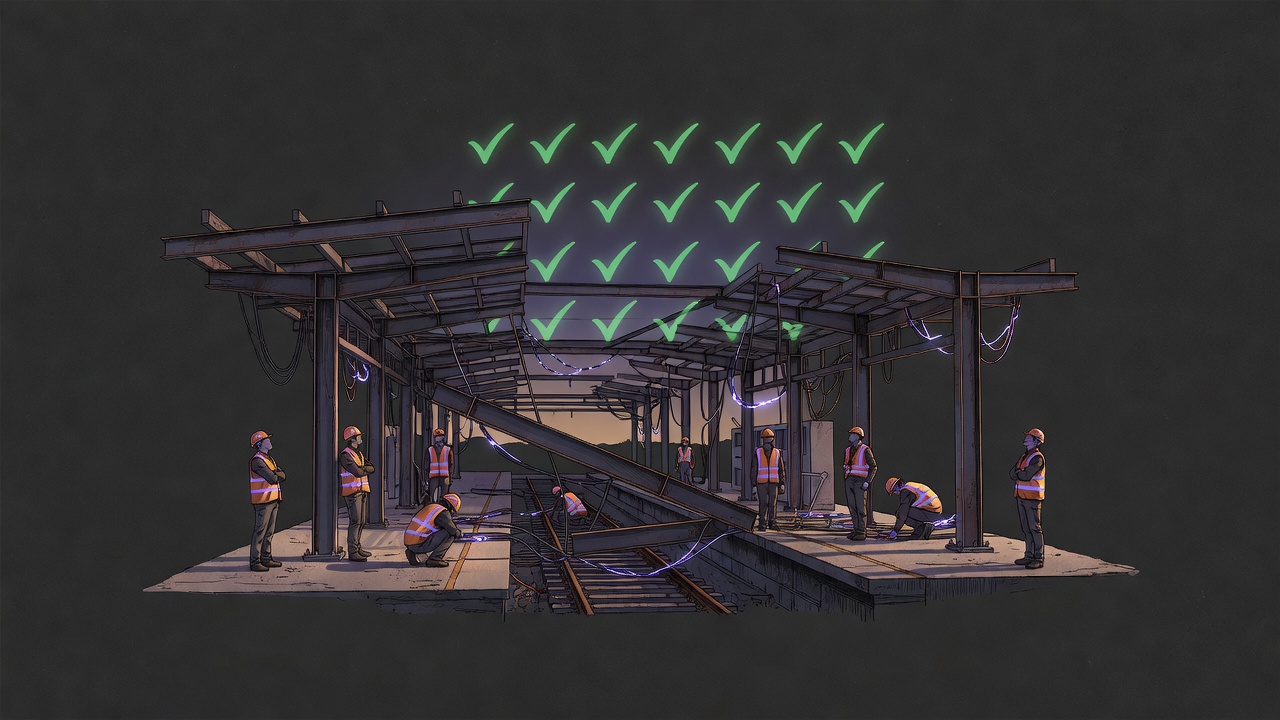
Your commissioning director reviews the latest alliance dashboard for the Melbourne rail extension. Every package shows on-track milestones and signed interface certificates. The tool records only what each contractor self-reports.
The real sequence breaks when structural steel from package three arrives two weeks late. Electrical package four already installed its first fix based on the earlier promise. No PMO alert fires because the system never linked the physical delivery date to the downstream schedule.
Contractors protect their own buffers. They log interface completion the moment drawings are exchanged, not when the workface is ready. The PMO software treats that exchange as fact and rolls the dates forward.
By the time commissioning crews reach the substation, they discover the cable trays clash with the ventilation ducts. The owner now funds both the redesign and the acceleration claims from two separate packages.
The mechanism is simple. PMO platforms record contractual milestones, not physical dependencies. Once a contractor marks an interface complete, the system stops tracking the actual sequence of work on site.
Alliance boards keep approving the monthly reports because the data inside the tool looks controlled. The cost of rework only appears later in variation registers that sit outside the main dashboard.
Fix the link between reported milestones and site verification. Require every interface sign-off to carry a dated photograph or laser scan that the owner’s team can check before the next package proceeds.